|
|
|
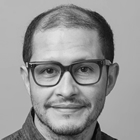
Antonio Acín
ICFO, Spain
Invited – Workshop 3: Quantum Information
|
|
|
|
|
|
|
|
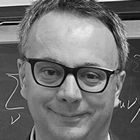
Jordi Arbiol
ICREA / ICN2, Spain
Invited – Workshop 1: Quantum materials: growth, characterization & device fabrication
Prof. Jordi Arbiol studied Physics at Universitat de Barcelona (UB) in 1997, where also obtained his PhD in 2001. He worked as Assistant Professor at UB (2001-2009). From 2009 to 2015 he was ICREA Prof. at ICMAB-CSIC. Since 2015 he is ICREA Prof. at ICN2. President of the Spanish Microscopy Society (SME) (2017-2021) and Executive Board Member of the International Federation of Societies for Microscopy (IFSM) (2019-2026). Founding member of e-DREAM. Scientific Coordinator of the METCAM and In-CAEM projects at the Joint Electron Microscopy Center at ALBA Synchrotron (JEMCA). Prof Arbiol is an experimental physicist pioneering AI-enabled electron microscopy, adaptive atomic-scale analysis and three-dimensional structural reconstruction for quantum, semiconductor, energy and functional materials. Across his career, he has progressively connected atomic-resolution imaging, quantitative spectroscopy, AI-enabled analysis, three-dimensional atomic modelling and theoretical simulation. This trajectory has moved his research from expert-driven characterisation of individual structures towards experiment-derived, uncertainty-aware and identifiability-driven descriptions of real materials, such as quantum systems and devices. With more than 600 published manuscripts on the topic.
|
|
|
|
|
|
|
|
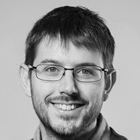
Nongnuch Artrith
Utrecht University, The Netherlands
Invited – Workshop 2: AI for chemistry and energy materials (batteries, catalysis, photovoltaics)
Dr. rer. nat. Nongnuch Artrith (https://github.com/atomisticnet) is an Assistant Professor at the Debye Institute for Nanomaterials Science, Utrecht University. Previously, she was a Research Scientist in Chemical Engineering at Columbia University, USA, with partial support from the Center for Functional Nanomaterials at Brookhaven National Laboratory. She is also a PI at the Columbia Center for Computational Electrochemistry.
She obtained her PhD in Theoretical Chemistry from Ruhr University Bochum, Germany, and completed postdoctoral research at MIT and UC Berkeley. In 2019, she was named a Scialog Fellow for Advanced Energy Storage. Since 2023, Nong is a member of the NL ARC CBBC (https://arc-cbbc.nl ).
Nong is one of the main developers of the open-source Atomic Energy Network (ænet), a software package for machine learning in materials science. Her research focuses on developing and applying first-principles and machine learning methods to discover energy materials and interpret experimental observations, with applications in batteries, catalysis, and spectroscopy at interfaces.
|
|
|
|
|
|
|
|
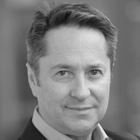
Alain Aspect
Université Paris-Saclay, France
Plenary Talk
A former student of ENS Cachan (now ENS Paris‑Saclay), Alain Aspect is a professor at the Institut d’Optique–Université Paris‑Saclay, an honorary professor at École Polytechnique, and an emeritus research director at CNRS. He is a member of the French Academy of Sciences, the Academy of Technologies, and numerous foreign scientific academies.
His work on fundamental quantum phenomena involving photons and atoms has earned him many awards in France and abroad, including the 2022 Nobel Prize in Physics for his “experiments with entangled photons, establishing the violation of Bell inequalities and paving the way for quantum information science.” After carrying out this research at the Institut d’Optique between 1975 and 1982, he joined Claude Cohen‑Tannoudji’s group at ENS Paris, exploring laser cooling of atoms (Nobel Prize 1997). In 1993, he created at the Institut d’Optique a research group active in the field of quantum atomic optics and neutral‑atom quantum simulators.
|
|
|
|
|
|
|
|
Antoine Browaeys
Institut d'Optique / CNRS, France
Plenary Talk
Antoine Browaeys is an experimental physicist specializing in quantum physics. He works at the Charles Fabry Laboratory of the Institut d’Optique. His research aims to understand the quantum properties of systems composed of many particles in situations that remain beyond the reach of current theoretical or numerical methods. These are often cases in which interactions between particles play the dominant role.
One way to make progress is to build synthetic quantum systems atom by atom and control their interactions using lasers in order to study model many-body systems. In the laboratory, this involves cooling, trapping, manipulating, and observing individual atoms. The goal is to develop an intuitive understanding of these interacting systems and to stimulate theoretical advances that can be applied to the understading of phenomena such as quantum magnetism and high-temperature superconductivity.
Beyond these fundamental research challenges, such synthetic systems, also known as quantum simulators, could help solve practical problems of logistical or industrial interest. These prospects led to the creation of the startup PASQAL, of which Antoine Browaeys is one of the co-founders.
|
|
|
|
|
|
|
|
Markus J. Buehler
MIT, USA
Plenary Talk
Markus J. Buehler is the McAfee Professor of Engineering at MIT and a pioneer in superintelligence for scientific discovery across multiple fields, ranging from materials science to bioology. His research combines molecular and multiscale modeling, generative AI, and experimental synthesis and characterization to understand and design materials with tailored mechanical, optical, and biological properties.
Buehler pioneered the field of materiomics, connecting the structure and behavior of hierarchical materials across scales to their function and performance. His work spans bio-inspired materials, protein design, fracture mechanics, and additive manufacturing. More recently, he has developed multi-agent AI platforms and decentralized swarms that integrate knowledge across disciplines, formulate and evaluate hypotheses, and support autonomous scientific discovery in materials science, engineering, biology, and healthcare. He is also a startup founder, board member, and advisor, helping translate emerging technologies into real-world applications.
He has held major leadership positions at MIT and in the broader engineering community, served as President of the Society of Engineering Science (SES), and serves as Editor-in-Chief of the Journal of the Mechanical Behavior of Biomedical Materials. Buehler has contributed to national science policy through committee work with the National Academies of Sciences, Engineering, and Medicine (NASEM) and congressional briefings on artificial intelligence and its applications to scientific discovery.
Buehler is a member of the U.S. National Academy of Engineering, a Fellow of the Royal Society of Chemistry, and a Fellow of the American Institute for Medical and Biological Engineering. His honors include the Feynman Prize, ASME Drucker Medal, J. R. Rice Medal, and the Washington Award. For more than a decade, he has also taught executive and technical professionals at MIT.
|
|
|
|
|
|
|
|
Juan Carrasquilla Alvarez
ETH Zürich, Switzerland
Invited – Workshop 4: AI for Quantum materials and Quantum Technologies
|
|
|
|
|
|
|
|
Stefano Carretta
Università di Parma, Italy
Invited – Workshop 4: Quantum Computing
Prof. Stefano Carretta obtained his PhD in Physics at the University of Parma in 2005, working in molecular magnetism under the guidance of Prof. G. Amoretti. He has been postdoc fellows of the National Institute for the Physics of Matter, postdoc of the Science faculty of the University of Parma and Researcher of the National Interuniversity Consortium for the Physical Sciences of Matter. Since the end of 2010 he is Associate Professor and from 2019 Full Professor in Physics of Matter at the University of Parma. He is Rector's Delegate for European and International Research.
His research activity has been mainly focused on the theoretical modelling of the quantum behavior of magnetic molecules. The aim of his research has been twofold: the understanding of fundamental phenomena and the identification of systems suitable for technological applications, especially in the field of quantum information processing. His work has demonstrated the importance of S-mixing in the quantum dynamics of magnetic molecules. He contributed to put forward some of the first proposals for the use of magnetic molecules as qubits and the first proposal for exploiting molecular nanomagnets as quantum simulators. He contributed also to give the theoretical explanation for the long-lasting problem of the nature of the NMR signal in antiferromagnetic rings and its link to the relaxation dynamics. Recently, he has proposed that a new type of high-temperature slow relaxation dynamics occurs in the Ni10 family of compounds and explained the complex relaxation dynamics of the 3d-based molecular nanomagnets with the highest blocking temperature.
His research interests encompass also intermetallic and f electron systems. For instance, he has developed a generalization to J-mixing compounds for the analytical linear theory of magnetocrystalline anisotropy in 3d-4f intermetallics. He has investigated the nature of the hidden order parameter in the ordered phase of NpO2, showing that the driving order parameter is provided by rank-5 magnetic triakontadipoles, as a result of superexchange interactions. He has also demonstrated the presence of quadrupolar waves in the low-frequency dynamics of UO2. He has active collaborations with several experimental groups, and he regularly visits large-scale facilities to participate to neutron scattering experiments.
|
|
|
|
|
|
|
|
Michele Ceriotti
EPFL, Switzerland
Invited – Plenary Session
Michele Ceriotti is a professor at EPFL, where he leads the laboratory for Computational Science and Modeling and directs the Institute of Materials. His research interests are rooted in the atomistic-scale modeling of matter bridging quantum mechanics, statistical physics and machine learning. He has contributed modeling insights into several classes of materials, from water and aqueous systems to molecular crystals, functional materials, metallic alloys and high-entropy compounds. He is a vocal advocate of open science and open software, leading the development of several open-source modeling tools including http://metatensor.org, http://ipi-code.org and http://chemiscope.org.
|
|
|
|
|
|
|
|
Kamal Choudhary
Johns Hopkins University, USA
Invited – Workshop 4: AI for Quantum materials and Quantum Technologies
Kamal Choudhary is an assistant professor in the Department of Materials Science and Engineering, with a joint appointment in electrical and computer engineering. His research focuses on atomistic materials design using classical mechanics, quantum mechanics, and machine learning methods to accelerate experimental discovery. Choudhary served as a staff scientist at the National Institute of Standards and Technology (NIST). He is the creator of the widely used JARVIS (Joint Automated Repository for Various Integrated Simulations) infrastructure for materials design, hosted at NIST. He is also the developer of AtomGPT.org and ChatGPT Material Explorer, custom AI agents for materials science.
At AtomGPTLab, his work bridges theory, simulation, and artificial intelligence to advance the discovery and design of materials for applications in electronics, energy, and quantum technologies. His research interests include condensed matter physics, density functional theory, force fields, graph neural networks, large-language models and quantum computing algorithms. He has contributed to the computational discovery of materials such as 2D materials, solar absorbers, topological insulators, superconductors, thermoelectrics, metal-organic frameworks, and dielectrics.
|
|
|
|
|
|
|
|
Ignacio Cirac
Max Planck Institute of Quantum Optics, Germany
Plenary Talk
Ignacio Cirac graduated in Theoretical Physics at the Complutense University of Madrid (Spain) in 1988, and gained his PhD in 1991 at the same university. Between 1991 and 1996, he was Associate Professor at the University of Castilla-La Mancha (Spain), and spent eighteen months at the University of Colorado (US) working with Peter Zoller. From 1996 until 2001 he was Professor of Theoretical Physics at the University of Innsbruck (Austria). Since 2001 he is a member of the Max Planck Society and director at the Max Planck Institute of Quantum Optics (Garching, Germany). In 2002 he also became honorary professor at the Technical University of Munich.
His field of research is quantum information theory. With his collaborators, he introduced the first proposals of quantum computers, simulators, and repeaters with atoms, and developed a theory of tensor networks to describe quantum many-body systems.
|
|
|
|
|
|
|
|
Laura Classen
Max Planck Institute for Solid State Research, Germany
Invited – Workshop 2: Quantum matter: theory & simulations
2023-now: Assistant Professor at Technical University of Munich
2021-now: Research group leader at Max Planck Institute for Solid State Research
2020-2021: Assistant physicist at Brookhaven National Laboratory
2019-2020: Postdoc at University of Minnesota
2017-2019: Postdoc at Brookhaven National Laboratory
2013-2016: Ph.D. in Theoretical Physics at University of Heidelberg
|
|
|
|
|
|
|
|
Sonia Conesa Boj
TU Delft, The Netherlands
Invited – Workshop 1: Quantum materials: growth, characterization & device fabrication
Prof. Sonia Conesa-Boj obtained her Ph.D. in Nanoscience and Nanotechnology at the University of Barcelona (Spain) in 2011. Afterwards she moved to a postdoctoral research position at EPFL Lausanne, funded by a Marie-Heim Vogtlin personal fellowship awarded by the Swiss National Science Foundation. After a second postdoc in The Netherlands, in 2016 Dr. Conesa-Boj became Assistant Professor at the Department of Quantum Nanoscience and the Kavli Instiuture of Nanoscience at TU Delft, being promoted in 2020 and 2025 to Associate Professor and Full Professor respectively. The focus of her research is developing novel approaches for the growth and characterisation of low-dimensional nanoscale materials, from nanowires to van der Waals layered materials. She has demonstrated how the exploitation of state-of-the-art Transmission Electron Microscopy techniques provide a unique window to unravel the physical properties of novel nanomaterials. Dr. Sonia Conesa-Boj is the author of more than 40 peer-reviewed publications and her research has been supported, among others, by the award of an ERC Starting Grant, a NWO Vidi grant, and a Dutch "Top Kennis en Innovatie" Consortium grant.
|
|
|
|
|
|
|
|
Sandip De
BASF, Germany
Invited - Industrial Forum
Sandip De leads the Quantum Mechanical Simulation for Solid-State Materials & Inorganic Chemistry team at BASF SE in Ludwigshafen. His expertise spans heterogeneous catalysis, inorganic chemistry, atomistic materials modelling and machine‑learning approaches for materials discovery.
Originally from India, he completed his PhD at the University of Basel under Stefan Goedecker, followed by research positions at IBM Research India and EPFL in Michele Ceriotti’s group. He joined BASF in 2018, where he develops computational and data‑driven methods to accelerate materials innovation.
He is a highly cited researcher with influential contributions to quantum simulations, machine‑learning potentials and materials informatics.
|
|
|
|
|
|
|
|
Juan J. de Pablo
New York University, USA
Keynote – Plenary Session
Dr. Juan de Pablo is the University’s inaugural Executive Vice President for Global Science and Technology, and the Executive Dean of the NYU Tandon School of Engineering. He leads cross-University, multidisciplinary, and globally focused efforts to accelerate the momentum of NYU’s vast science and technology enterprise for the purposes of solving humanity’s largest challenges.
A prominent materials scientist and chemical engineer, de Pablo’s research focuses on polymers, biological macromolecules such as proteins and DNA, glasses, and liquid crystals. He is a leader in developing molecular models and advanced computational approaches to elucidate complex molecular processes over wide ranges of length and time scales. He has developed advanced algorithms to design and predict the structure and properties of complex fluids and solids at a molecular level, and has been a pioneer in the use of data-driven machine learning approaches for materials design.
|
|
|
|
|
|
|
|
Volker Deringer
University of Oxford, UK
Invited – Plenary Session
Volker Deringer studied chemistry at RWTH Aachen University (Germany), where he obtained his diploma (2010) and doctorate (summa cum laude, 2014) under the guidance of Richard Dronskowski.
In 2015, he moved to the University of Cambridge as a fellow of the Alexander von Humboldt Foundation; in 2017, he was awarded a Leverhulme Early Career Fellowship at the same institution. He joined Oxford as an Associate Professor in September 2019 and was awarded the title of Professor of Materials Chemistry in August 2025.
In addition to his research and teaching responsibilities in the Department, Volker is a Tutorial Fellow at St Anne's College, Oxford. He currently teaches first- and second-year Inorganic Chemistry at St Anne's and Oriel Colleges.
|
|
|
|
|
|
|
|
Eleni Diamanti
LIP6 Sorbonne Université, France
Invited – Plenary Session
Eleni Diamanti is CNRS research director at the LIP6 laboratory of Sorbonne University in Paris. She received her PhD in Electrical Engineering from Stanford University in 2006 and was a Marie Curie postdoctoral fellow at the Institute of Optics Graduate School in Palaiseau before joining the CNRS in 2009. Her research focuses on experimental quantum cryptography and communication, and on the development of photonic resources and applications for quantum networks. She is a recipient of a European Research Council Starting Grant, director of the Paris Centre for Quantum Technologies, and was awarded the CNRS Silver and Innovation Medals in 2024. She also serves as chair of the European Quantum Technologies Advisory Group, and is cofounder and scientific advisor of the start-up company Welinq that specializes in quantum interconnect technology.
|
|
|
|
|
|
|
|
Ralf Drautz
Ruhr-Universität Bochum, Germany
Invited – Workshop 2: AI for chemistry and energy materials (batteries, catalysis, photovoltaics)
|
|
|
|
|
|
|
|
Claudia Draxl
Humboldt-Universität zu Berlin, Germany
Plenary Talk
|
|
|
|
|
|
|
|
Fernanda Duarte
University of Oxford, UK
Invited – Workshop 3: AI for BioMatter: Designing Molecules, Materials, and Medicine
Fernanda Duarte pursued both her undergraduate and graduate studies at the Pontificia Universidad Católica de Chile (PUC). Her PhD research focused on the characterisation of chemical processes using Density Functional Theory (DFT) and conceptual DFT. During her Pre-doctoral Fulbright Scholarship at Duke University, she expanded her expertise to QM/MM methods and biomolecular modelling.
She continued this path at Uppsala University, investigating chemical promiscuity in enzyme evolution. In 2015, Fernanda was awarded a Royal Society Newton Fellowship and joined the University of Oxford. Following a period as a lecturer at the University of Edinburgh, she returned to Oxford in 2018 as an Associate Professor and was promoted to Professor in 2026.
She leads a research team developing computational tools to explore (bio)chemical reactivity, optimise chemical synthesis, and guide molecular design across sizes and timescales, bridging theoretical chemistry with practical applications.
|
|
|
|
|
|
|
|
Jens Eisert
Freie Universität Berlin, Germany
Keynote – Plenary Session
Jens Eisert is a professor of quantum physics with 25 years of research experience. He is one of the world-wide most respected and one of the most cited researchers of his generation. A recent perspectives article with John Preskill has provided substantial guidance to the field. He is known for mathematically minded work, applied to practical and pragmatically relevant problems. On the basis of his achievements he has been awarded the Google NISQ Award, a EURYI Award, a ERC Consolidator Award, and an ERC Advanced Grant of the prestigious European Research Council.
|
|
|
|
|
|
|
|
Rubén Esteban Llorente
CFM-CSIC / DIPC, Spain
Invited – Workshop 6: Topological quantum matter: electronics, spintronics, photonics & phononics
|
|
|
|
|
|
|
|
Francesca Ferlaino
Universität Innsbruck, Austria
Keynote – Plenary Session
Francesca Ferlaino is born on 23th December 1977 in Napoli, Italy. There, she studied physics at the University of Federico II and received her master degree in 2000 for a theoretical work on Bose-Einstein condensates, jointly conducted in Naples and at the International School for Advanced Studies (SISSA) in Trieste.
As PhD student, she then re-directed her research interest towards experimental physics and started her PhD study at the University of Florence and at the European Laboratory for Non-linear Spectroscopy (LENS) in Florence under the supervision of Prof. M. Inguscio. At LENS, Francesca was involved in the first realization of quantum gases mixture of different alkali atomic species. After receiving her PhD degree in 2004, Francesca enjoyed to work at LENS for few years more as research associate.
In 2007, she moved to Austria first as a visiting scientist in the group of Prof. Grimm, then as postdoctoral Lise-Meitner fellow focusing on few-body and Efimov physics, and finally she received a full professorship in 2014. At the beginning, her stay in Innsbruck was just planned for 3 months. The 3 months became 6. The 6 months 1 year. 1 year easily doubled to 2 years, and the 2 years doubled again, and again :). In 2009, thanks to a START-Prize (FWF) and an ERC Starting Grant, Francesca could establish her independent research group. She funded the Dipolar Quantum Gas Group and started the so-called “ERBIUM” experiment, realizing the world-first Bose-Einstein condensate of Er in 2012.
Since 2014, Francesca is Full Professor at the University of Innsbruck and Scientific Director at the Institute for Quantum Optics and Quantum Information (IQOQI) of the Austrian Academy of Science (ÖAW). During the last years, she was awardee of numerous prestigious prizes and distinctions, including the Feltrinelli prize, the Alexander-von-Humboldt Professorship, the Science Prize of the City of Innsbruck, the Ignaz L. Lieben Prize, and the Fritz-Kohlrausch Prize for experimental physics. In addition, she received the START Prize, one ERC-Starting, one ERC-Consolidator grant and one one ERC-Advanced grant.
|
|
|
|
|
|
|
|
Jay M. Gambetta
IBM, USA
Keynote - Industrial Forum
Dr. Jay M. Gambetta is the Vice President in charge of IBM’s overall Quantum initiative. He was named as an IBM Fellow in 2018 for his leadership in advancing superconducting quantum computing and establishing IBM’s quantum strategy to bring quantum computing to the world, and to make the world quantum safe. Under his leadership, IBM was first to demonstrate a cloud-based quantum computing platform; a platform that has grown to become the predominant quantum service utilized by 579,000 users to run over 3 trillion quantum circuits. These users include 302 members of the IBM Quantum Network, representing forward-thinking academic, industry, and governmental organizations focused on building a quantum-native ecosystem. IBM Quantum continues to expand in the market by providing Quantum as a Service utilizing the IBM Quantum System One and Two series of devices with over 20 quantum systems available online, building the foundations of the quantum industry. In addition, he was responsible for the creation and early development of Qiskit; the leading open-source quantum computing software development kit, allowing users to build, optimize, and execute quantum circuits on hardware from a multitude of quantum service providers. Dr. Gambetta received his Ph.D. in Physics from Griffith University in Australia. He is a Fellow of the American Physical Society, IEEE Fellow, and has over 130 publications in the field of quantum information science with over 37,000 citations.
|
|
|
|
|
|
|
|
José Hugo García
Apeiron Agents, Spain
Invited - Industrial Forum
|
|
|
|
|
|
|
|
Paola Gori Giorgi
Microsoft Research, The Netherlands
Invited – Plenary Session
Paola Gori-Giorgi is a Senior Principal Research Manager at Microsoft Research AI for Science and leads the Skala project, which aims to transform density functional theory through data-driven, continuously improving exchange-correlation functionals. A recognized expert in electronic structure theory, she has made influential contributions to density functional theory, particularly in the areas of optimal transport, range separation, and dispersion interactions. Her work spans fundamental theory, method development, and large-scale scientific computing, with a current focus on bringing machine-learning advances into practical tools for chemistry and materials research.
|
|
|
|
|
|
|
|
Adolfo Grushin
DIPC, Spain
Invited – Workshop 2: Quantum matter: theory & simulations
|
|
|
|
|
|
|
|
Ganna Gryn'ova
University of Birmingham, UK
Invited – Workshop 2: AI for chemistry and energy materials (batteries, catalysis, photovoltaics)
Originally from Ukraine, Ganna (Anya) Gryn’ova received her BS and MSc in chemistry summa cum laude from Oles Honchar Dnipro National University. In 2014 she received a PhD in computational chemistry from Australian National University. Her doctoral thesis received the IUPAC-Solvay International Award for Young Chemists for one of the five most outstanding PhD theses in the general area of the chemical sciences worldwide. Anya continued her career as a postdoctoral researcher at École Polytechnique Fédérale de Lausanne, where in 2016 she won the Marie Skłodowska-Curie Actions individual fellowship.
In 2019, Dr. Gryn’ova started her independent scientific career leading the junior research group “Computational Carbon Chemistry” (CCC) at the Heidelberg Institute for Theoretical Studies (HITS gGmbH) and Interdisciplinary Center for Scientific Computing (IWR) at Heidelberg University, Germany. In 2021, Anya received the prestigious ERC Starting Grant for her project “PATTERNCHEM: Shape and Topology as Descriptors of Chemical and Physical Properties in Functional Organic Materials”; she also joined the Collaborative Research Centre SFB1249 “N-Heteropolycycles as Functional Materials” and the SIMPLAIX strategic research initiative on bridging scales from molecules to molecular materials by multiscale simulation and machine learning as a principal investigator.
In April 2024, Dr. Gryn’ova moved to UK and became an Associate Professor of Computational Chemistry at the University of Birmingham.
|
|
|
|
|
|
|
|
Kedar Hippalgaonkar
Nanyang Technological University, Singapore
Invited – Plenary Session
Asst. Prof. Kedar Hippalgaonkar is a joint appointee with the Materials Science and Engineering Department at Nanyang Technological University (NTU) and as a Senior Scientist at the Institute of Materials Research and Engineering (IMRE) at the Agency for Science Technology and Research (A*STAR). He is leading the Accelerated Materials Development for Manufacturing (AMDM) program from 2018-2023 focusing on the development of new materials, processes and optimization using Machine Learning, AI and high-throughput computations and experiments in electronic and plasmonic materials and polymers. He is also leading the Pharos Program on Hybrid (inorganic-organic) thermoelectrics for ambient applications from 2016-2020.
He has published over 50 research papers, and was nominated as a Journal of Materials Chemistry Emerging Investigator in 2019. He was recognized as a Science and Technology for Society Young Leader in Kyoto in 2015. For his outstanding graduate research, he was awarded the Materials Research Society Silver Medal in 2014. He graduated with a Bachelor of Science (Distinction) from the Department of Mechanical Engineering at Purdue University in 2003 and obtained his Doctor of Philosophy from the Department of Mechanical Engineering at UC Berkeley in 2014. While pursuing his doctoral studies, he conducted research on fundamentals of heat, charge and light in solid state materials.
|
|
|
|
|
|
|
|
Benjamin Huard
CNRS/ENS DE LYON, France
Invited – Plenary Session
|
|
|
|
|
|
|
|
Olexandr Isayev
Carnegie Mellon University, USA
Invited – Workshop 3: AI for BioMatter: Designing Molecules, Materials, and Medicine
I am the Carl and Amy Jones Professor of Chemistry at Carnegie Mellon University. My research focuses on solving fundamental chemical problems through machine learning, molecular modeling, and quantum mechanics.
Since 2016, my work has pioneered research at the interface between ML and quantum chemistry, resulting in several families of atomistic machine learning potentials now used by leading laboratories and companies worldwide.
|
|
|
|
|
|
|
|
Eunah Kim
Cornell University, USA
Invited – Workshop 4: AI for Quantum materials and Quantum Technologies
Eun-Ah Kim is a professor of physics at Cornell University. She is one of the leading experts in the theory of emergent phenomena in quantum materials and a pioneer in applying machine learning to quantum matter data. She thinks of her research as a study of societies—societies of electrons. Quantum mechanics allows for endless possibilities of rich and complex “social phenomena” that manifest through material properties. But because quantum mechanics forbids the tracking of individual electrons, the electron societies are mystical. Recent decades have seen experimental and theoretical data revolutions that can help us understand the mystical “societies” of quantum matter.
Kim obtained her PhD at the University of Illinois at Urbana-Champaign in 2005 and was a postdoctoral fellow at the Stanford Institute for Theoretical Physics. She has been at Cornell since 2008. She received a Faculty Early Career Development (CAREER) Program award from the National Science Foundation in 2010 and another award from the Department of Energy Early Career Research Program in 2013. Kim was named a fellow of the American Physical Society in 2020.
|
|
|
|
|
|
|
|
Aditi S Krishnapriyan
University of California Berkeley, USA
Invited – Workshop 1: Foundation and universal interatomic potentials
Assistant Professor of Chemical and Biomolecular Engineering
Assistant Professor of Electrical Engineering and Computer Sciences
Member, Berkeley AI Research (BAIR)
Education
2010 - 2013, B.S., University of California, Santa Barbara
2014 - 2019, Ph.D., Stanford University
2014 - 2018, DOE Computational Science Graduate Fellowship
|
|
|
|
|
|
|
|
Heather J. Kulik
MIT, USA
Keynote – Plenary Session
Heather J. Kulik is a Professor of Chemical Engineering and Chemistry at MIT. She received her B.E. in Chemical Engineering from Cooper Union in 2004 and her Ph.D. in Materials Science and Engineering from MIT in 2009. She completed postdocs at Lawrence Livermore (2010) and Stanford (2010−2013), prior to returning to MIT as a faculty member in 2013 and receiving tenure in 2021. She was promoted to the rank of Full Professor in 2024.
Her work has been recognized by a Burroughs Wellcome Fund Career Award at the Scientific Interface (2012-2017), Office of Naval Research Young Investigator Award (2018), DARPA Young Faculty Award (2018), AAAS Marion Milligan Mason Award (2019-2020), NSF CAREER Award (2019), the ACS COMP Division OpenEye Award for Outstanding Junior Faculty in Computational Chemistry, the JPCB Lectureship (ACS PHYS), the DARPA Director’s Fellowship (2020), a Sloan Fellowship (2021), the AIChE CoMSEF Impact award (2023), a TUM Hans Fischer Senior Fellowship (2023), and a Presidential Early Career Award for Scientists and Engineers (2025).
|
|
|
|
|
|
|
|
Jose Lado
Aalto University, Finland
Invited – Workshop 2: Quantum matter: theory & simulations
Jose Lado is an Assistant Professor at Aalto University, in Finland, working on the theory of quantum materials. His research focuses on designing emergent phenomena in quantum materials, combining materials science, quantum many-body physics, and machine learning. In particular, he focuses on engineering systems where electronic correlations and topology yield exotic physics such as topological excitations and emerging fractionalized particles, ultimately to design universal topological quantum computers. He often works in collaboration with experimental groups studying quantum materials in general, and two-dimensional materials in particular. He was awarded the Early Career Award by the European Physical Society in 2023, the ERC Consolidator Grant in 2025, and since 2026 he is the vice-director of the Finnish Center of Excellence in Quantum Materials
|
|
|
|
|
|
|
|
Nicola Marzari
University of Cambridge, UK
Plenary Talk
Professor Marzari’s research is dedicated to the development and application of novel electronic-structure theories, algorithms, and software to understand, predict, and ultimately design the properties of complex materials and complex states of matter.
This field is now achieving its long sought holy grail: predictive accuracy, where first-principles, quantum mechanical simulations can accurately describe the behaviour of interacting electrons and ions; the ability to capture the complexity of the real world by bridging length and time scales and abstracting microscopic dynamics of particles and excitations into mesoscopic models; and the growing power of machine learning and artificial intelligence, which are rapidly reshaping our approaches to scientific discovery and understanding.
Prof Marzari holds the prestigious Cavendish Professor of Physics chair. Established in 1871, this historic chair has played a central role in the leadership and direction of the Laboratory for over 150 years.
The Cavendish Professorship has been held by some of the most influential figures in the history of physics who, between them, changed completely our understanding of the physical world. Previous Cavendish Professors included James Clerk Maxwell, J J Thomson, Ernest Rutherford, and Nevill Mott.
|
|
|
|
|
|
|
|
Shyue Ping Ong
NUS, Singapore
Invited – Workshop 1: Foundation and universal interatomic potentials
Prof Shyue Ping Ong is a Provost's Chair Professor in Materials Science and Engineering at the National University of Singapore. He is widely recognized as one of the pioneers of foundation potentials, i.e., machine learning models with comprehensive coverage of the periodic table, with broad applications in materials discovery and design. Prof Ong is also the founder and lead developer of pymatgen, one of the most popular open-source libraries for materials analysis, and a core contributor to the Materials Project, a public platform that provides computed properties of all known materials. He has authored more than 170 peer-reviewed articles and has been recognized as a Clarivate Highly Cited Researcher since 2021. He was also a recipient of the prestigious US Department of Energy Early Career Research Program, the US Office of Naval Research Young Investigator Program and the Returning Singaporean Scientist Scheme awards.
|
|
|
|
|
|
|
|
Roman Orus
Multiverse Computing & DIPC, Spain
Keynote - Industrial Forum
I am the Scientific Director (CSO) and Cofounder of Multiverse Computing, as well as Ikerbasque research professor at the Donostia International Physics Center (DIPC) in San Sebastián, Spain. After obtaining my degree and PhD in Physics at the University of Barcelona in 2006, I worked as a research fellow at the University of Queensland, Australia, and the Max Planck Institute of Quantum Optics, Germany, as well as a junior professor at Johannes Gutenberg-Universität in Mainz, Germany. I was also visiting professor at the Universitè Paul Sabatier – CNRS, France, and at the DIPC. My research has been recognized by several awards, including a Marie Curie Incoming International Fellowship, and the Early Career Prize (2014) by the European Physical Society. I have written more than 80 scientific articles about quantum research cited around 5500 times, and I am also honorary member of the steering board of the journal Quantum, member of the ‘Quantum for Quants’ (Q4Q) commission of the Quantum World Association, partner at Entanglement Partners, and president of the Specialized Group on Quantum Information at the Spanish Royal Society of Physics.
|
|
|
|
|
|
|
|
Törmä Päivi
Aalto University, Finland
Keynote – Plenary Session
Päivi Törmä is a professor in the Department of Applied Physics, Aalto University and has a Master of Advanced Study degree from the University of Cambridge, U.K., and PhD in 1996 from the University of Helsinki. She was a postdoc at University of Ulm, Germany, and University of Innsbruck, Austria, and a professor at University of Jyväskylä, Finland, before being appointed at Aalto University in 2008. Her research ranges from theoretical quantum many-body physics to experiments in nanophotonics. Her work has revealed a new connection between quantum geometry and superconductivity that explains why flat bands can carry supercurrent, essential in the search for superconductors that work at high temperatures. In her experiments, Päivi has worked on strong coupling of surface plasmon polariton modes and molecules, and her group succeeded in realizing the first plasmonic Bose-Einstein condensate.
|
|
|
|
|
|
|
|
Patrick Rinke
Technical University of Munich, Germany
Invited – Plenary Session
|
|
|
|
|
|
|
|
Anna Sanpera Trigueros
UAB/ICREA, Spain
Invited – Workshop 3: Quantum Information
I obtain my Physics degree from the Universitat Autòmoma de Barcelona 1986. From 1988 to 1992 I was a doctoral fellow (FPI) of the Ministry of Education and Science at the Autonomous University of Barcelona and defended my PhD in 1992. In 1993, I moved to Oxford University, fas a research fellow and 1994-1995 as a Fleming Fellow. In 1996, I was European postdoctoral research fellow in CEA-Saclay. In 1998, I was research fellow at Leibninz University, Hannover (Germany), where I habitlitated in 2002 and became assistant professor. Since 2005 I am an ICREA research professor. My research interests involve quantum information theory, in particular entanglement theory, but also to quantum gases, condensed matter, out-of-equilibrium open quantum systems and quantum neural networks. I am also interested and involved in education and the popularization of science to society. Otherwise, I am fond of literature, sports and children.
|
|
|
|
|
|
|
|
Shintaro Sato
Fujitsu, Japan
Keynote - Industrial Forum
Shintaro Sato is Fellow and Head of Quantum Laboratory at Fujitsu Research, Fujitsu Limited in Japan. He also holds a concurrent position as Deputy Director of the RIKEN RQC-Fujitsu Collaboration Center at RIKEN. His responsibilities at Fujitsu include leading research on all technology layers of quantum computing: quantum devices, platforms, software, and applications. Prior to his work in quantum computing, he conducted research and development on post-silicon devices using carbon nanotubes and two-dimensional materials. He holds a Ph.D. in Mechanical Engineering from University of Minnesota, USA, and an MS in Science and Engineering (Physics) from University of Tsukuba, Japan. His research areas include quantum computing, nanoelectronics, and nanomaterials. He is also Fellow of the Japan Society of Applied Physics.
|
|
|
|
|
|
|
|
Christoph Schran
University of Cambridge, UK
Invited – Workshop 2: AI for chemistry and energy materials (batteries, catalysis, photovoltaics)
Christoph studied Chemistry in Bochum, where he obtained his PhD in 2019, during which he participated in various exchanges and research visits to Glasgow, Stanford University, and the École Normale Supérieure (ENS) in Paris. After completing his PhD, he briefly moved to Prague before taking up a postdoctoral research fellowship in London in 2020. In October 2020, he transitioned to Cambridge, where he began working with Angelos Michaelides on using machine learning to understand complex aqueous systems.
In 2023, Christoph started his independent career as an Assistant Professor in Computational Atomic-Scale Materials Science at the Cavendish Laboratory, leading the Frontiers in Atomistic Simulation Techniques group. Together with a team of computational scientists, he studies challenging materials, primarily involving water, using advanced computational methods. Recently, his major focus has been on developing machine learning potentials to provide insights into complex aqueous systems, for which accurate and efficient representations of potential energy surfaces are urgently needed.
|
|
|
|
|
|
|
|
Javad Shabani
New York University, USA
Invited – Plenary Session
Dr. Javad Shabani is Professor of Physics and Electrical and Computer Engineering, and Director of the Quantum Institute at New York University. He received his PhD from Princeton University. After two years of research on semiconductor-based qubits at Harvard University, he joined UC Santa Barbara. There, he worked closely with Microsoft research on hybrid semiconductors/superconductors heterostructures to study topological superconductivity. His group recently pioneered hyperdoped superconducting germanium as a CMOS-compatible platform for quantum devices.
|
|
|
|
|
|
|
|
Leopold Talirz
Schott AG, Germany
Invited - Industrial Forum
Leopold Talirz studied physics at ETH Zurich and spent a decade in academia as a computational materials scientist, using atomistic simulations to study materials and developing software to make materials science more open, reproducible, and accessible, notably AiiDA and the Materials Cloud. In 2021 he joined Microsoft’s Azure Quantum team to build Azure Quantum Elements, a cloud platform that accelerates atomistic simulations through high-performance computing, machine learning, and, eventually, quantum computing. Since March 2024 he has been with the specialty glass manufacturer SCHOTT AG, where he is an expert for materials informatics and heads the computational materials engineering group.
|
|
|
|
|
|
|
|
Alexandre Tkatchenko
University of Luxembourg, Luxembourg
Keynote – Plenary Session
Alexandre Tkatchenko is a Professor of Theoretical Condensed Matter Physics at the University of Luxembourg. He is also Head of the Department of Physics and Materials Science and Head of the Theoretical Chemical Physics group.
|
|
|
|
|
|
|
|
Ali Yazdani
Princeton University, USA
Keynote – Plenary Session
Ali Yazdani is the James S. McDonnell Distinguished University Professor of Physics at Princeton University and Co-Director of the Princeton Quantum Initiative. He is known for his research in advancing our understanding of emergent quantum phenomena by application and development of high-resolution microscopy techniques to directly visualize highly entangled quantum states of matter.
Yazdani graduated from UC Berkeley with a degree in physics and from Stanford University in 1995 with a Ph.D. in applied physics. After working as a postdoctoral scientist at IBM, he started his own independent research group at the University of Illinois in Urbana-Champaign before joining Princeton University's Department of Physics in 2005. He has held visiting professorships at Stanford and at Cambridge University (Trinity College) in the UK and has been a Loeb Lecturer at Harvard.
|
|
|
|
|
|
|
|
Francesco Zatelli
QuTech, The Netherlands
Invited – Workshop 4: Quantum Computing
Francesco Zatelli is an experimental quantum physicist and PhD candidate in Leo Kouwenhoven’s group at QuTech, TU Delft. His research focuses on engineering Kitaev chains in hybrid semiconductor–superconductor quantum dot arrays as a route toward Majorana qubits.
He holds a BSc in Physics from the University of Milan and an MSc in Applied Physics from TU Delft. He also carried out a research internship on superconducting qubits in Andreas Wallraff’s group at ETH Zurich. He received a QuTech Scholarship and was named one of TU Delft’s Applied Sciences Graduates of the Year for 2022–2023.
|
|
|
|
|
|
|
|
Julija Zavadlav
Technical University of Munich, Germany
Invited – Workshop 3: AI for BioMatter: Designing Molecules, Materials, and Medicine
The research area of Prof. Zavadlav (b. 1987) lies in the development of efficient and predictive computational methods and models for application areas ranging from life sciences to engineering. To this end, she is integrating traditional physics-based approaches with emerging machine learning techniques and Bayesian modeling and developing novel concurrent multi-resolution simulation techniques.
Prof. Zavadlav studied physics at the University of Ljubljana where she received her Ph.D. in 2015 while working at the National Institute of Chemistry in Slovenia. In 2016, she joined the Computational Science and Engineering Laboratory at ETH Zurich and was awarded the ETH Postdoctoral Fellowship. In 2019, she was appointed as Assistant Professor for Multiscale Modeling of Fluid Materials at TUM. She was awarded with the ERC Starting Grant in 2022.
|
|
|
|
|
|
|
|
Claudio Zeni
Microsoft Research, UK
Invited - Industrial Forum
Claudio Zeni is a Senior Researcher at Microsoft Research Cambridge – AI for Science, working on machine learning for the simulation and discovery of materials, with a particular focus on generative models and data-driven approaches for materials design.
He holds a PhD in Computational Physics from King’s College London, where his research focused on machine learning methods for modelling materials at the atomistic scale. Prior to joining Microsoft Research, Claudio held a postdoctoral position where he worked on computational physics, data science, and machine learning.
|
|
|
|
|
|
|
|
Simon Zihlmann
CEA, France
Invited – Workshop 4: Quantum Computing
Simon Zihlmann is a researcher at CEA Grenoble (IRIG-PHELIQS), where he holds a permanent research position since 2023. He obtained his PhD in Physics from the University of Basel in 2018, working on spin and charge dynamics in graphene-based systems. After his PhD, he joined CEA Grenoble as a postdoctoral researcher (2019–2023), where he contributed to the development of hybrid semiconductor–superconductor quantum devices. His current research focuses on spin qubits and their coupling to microwave photons in circuit-QED architectures, aiming to advance scalable platforms for quantum information processing.
|
|
|
|
|
| |